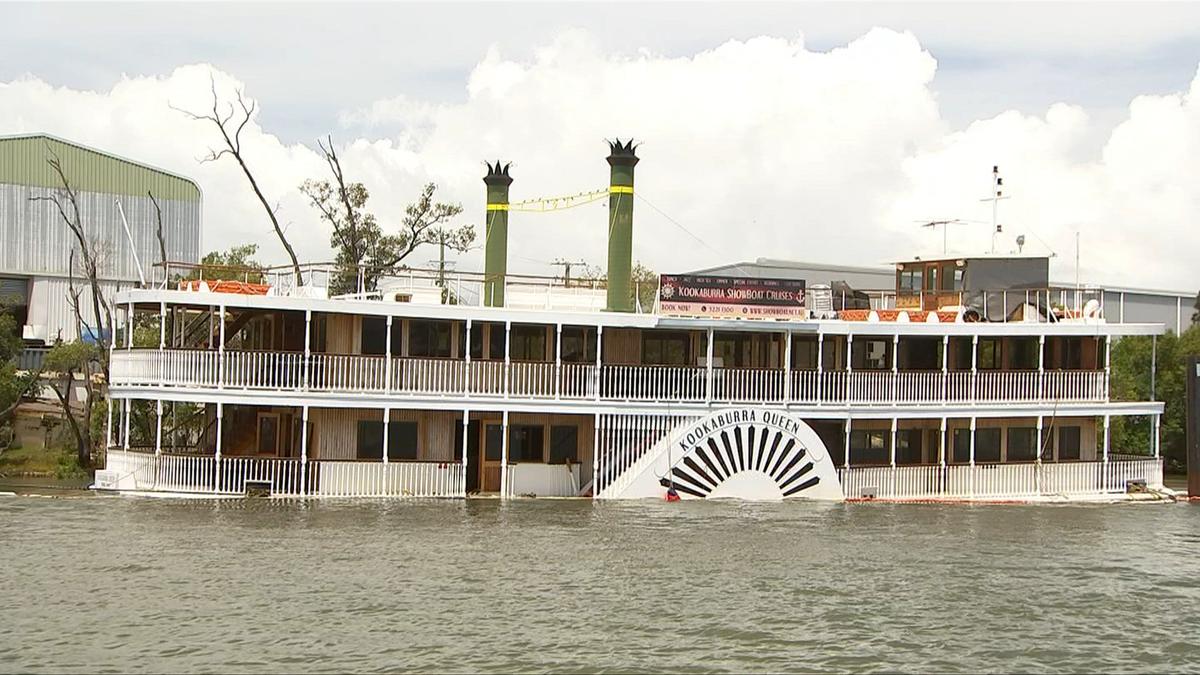
Brisbane's iconic maritime landscape faces a profound moment of uncertainty as the beloved paddleboat, the Kookaburra Queen I, remains partially submerged in the Brisbane River. What began as a discovery of the vessel sinking at its Hemmant mooring has now escalated with the disheartening news that a refloat bid has been abruptly halted. This development casts a heavy shadow over the boat's prospects, leaving many to ponder the grim reality of the Kookaburra Queen future. Once a vibrant symbol of Brisbane's river life and a cornerstone of its tourism, the Kookaburra Queen I now represents a mystery steeped in questions about maintenance, ownership, and the very viability of its existence.
For decades, the paddleboat served as more than just a mode of transport; it was a floating venue for celebration, a picturesque backdrop for memories, and an enduring piece of the city's identity. Its current state—lying on the riverbed—is not only a physical deterioration but an emotional blow to a community that holds it dear. The halting of salvage operations further complicates an already dire situation, deepening the concern for what lies ahead for this historic vessel. The path forward for the Kookaburra Queen I is murky, with complex decisions looming over its owners and stakeholders, all grappling with the monumental task of addressing its fate.
A Legacy Adrift: The Kookaburra Queen I's Storied Past
Before its current predicament, the Kookaburra Queen I was an undisputed jewel of the Brisbane River. Launched in 1986, it quickly became a significant attraction, most notably during the world-renowned Expo '88. For many, memories of Brisbane are intrinsically linked to this grand vessel, gracefully navigating the river, its paddlewheel stirring the water as it ferried countless guests. It wasn't just a boat; it was a venue for life's most cherished moments, boasting two dance floors, a comprehensive public address system, and seating for 320 guests. Complete with a commercial kitchen and eight bathrooms, it was a fully-fledged floating entertainment hub, hosting innumerable weddings, parties, and corporate events that contributed to Brisbane's vibrant social fabric.
Its design, evoking the classic paddlewheel steamers of the 19th century, offered a unique blend of nostalgia and modern amenity. However, even iconic vessels are not immune to the ravages of time and nature. The Kookaburra Queen I faced severe challenges over the years, enduring significant damage during the devastating Queensland floods of 2011 and again in 2022. These repeated blows took their toll, ultimately leading to the cessation of its commercial operations, signaling the end of an era even before its recent submersion. The story of its decline is intertwined with the city's own struggles with environmental disasters, highlighting the fragility of even the most robust structures. To delve deeper into its journey from celebrated icon to its present plight, read Kookaburra Queen I: From Expo '88 Icon to Brisbane River's Sinking Fate.
The Unfolding Mystery: From Seaworthy to Submerged
The sudden submersion of the Kookaburra Queen I has sparked widespread confusion and an almost universal sense of disbelief within the Brisbane community. Discovered sinking at its mooring in Hemmant, the incident quickly raised pointed questions about the vessel's maintenance and the precise circumstances that led to its current state. The paddleboat had been sold less than five months prior, in September 2023, through Grays auction house for a sum exceeding $550,000. This recent transaction only deepens the enigma, as details about the buyer remain scarce, adding another layer of intrigue to the vessel’s already complex narrative.
Former owner Jim Kelly, who also served as captain during his extensive tenure with Brisbane Cruises, expressed profound dismay at the sight of the vessel. "It’s bloody pathetic," he remarked, emphasizing the boat's solid triple diagonal hull, a construction detail that should have ensured its seaworthiness. Kelly noted that just a month before its discovery on the riverbed, the Kookaburra Queen I was well-maintained and showed no signs of distress, making its abrupt decline all the more puzzling. "Now it’s a mystery—suddenly it’s taken off the berth and it’s sitting on the bottom," he stated, encapsulating the bewilderment felt by many. This rapid deterioration from an apparently sound condition to partial submersion has fueled speculation and underscores the urgent need for answers regarding its immediate past. For more on the initial sinking, consider reading Kookaburra Queen I Sinking: Unraveling the Mystery of Brisbane's Icon.
Refloat Bid Halted: What Does This Mean for the Kookaburra Queen Future?
The latest and most concerning development for the Kookaburra Queen I is the directive to halt efforts to refloat the iconic paddlewheeler. This order has sent shockwaves through the community, significantly dampening hopes for a swift recovery and placing the Kookaburra Queen future in an even more precarious position. Without immediate intervention, the prolonged submersion poses increasing risks of further structural damage, making any future salvage or restoration efforts more complex and costly. The longer the vessel remains underwater, the greater the challenge in preserving its integrity, particularly for its delicate internal components and historical features.
While Maritime Safety Queensland has indicated that the partially submerged boat is unlikely to pose an immediate hazard to other navigating vessels in the river, this assessment primarily addresses safety for other river users, not the vessel itself. This stance, while reassuring for river traffic, offers little comfort regarding the paddleboat's survival. The cessation of the refloat bid means that the immediate focus shifts from active recovery to a period of waiting, with the legal and logistical complexities likely to be considerable. The reasons behind the halt are not entirely clear, but they could range from safety concerns during the refloat attempt, environmental considerations, or unresolved issues related to ownership, insurance, or financial viability. Whatever the cause, this pause is critical and suggests a deeper set of challenges that need to be resolved before any progress can be made, intensifying the already profound uncertainty surrounding the Kookaburra Queen I.
Navigating the Uncertainty: Potential Scenarios for the Kookaburra Queen's Future
The halting of the refloat bid leaves the Kookaburra Queen future hanging in the balance, with several potential scenarios emerging from the depths of its present predicament. Each option presents its own set of challenges and implications, both for the vessel itself and for Brisbane's maritime heritage.
- Full Restoration and Return to Service: This is arguably the most optimistic outcome, deeply desired by the community. However, it faces colossal hurdles. The cost of salvaging, repairing flood damage, and then undertaking a comprehensive restoration after prolonged submersion would be astronomical. Given its cessation of commercial operations after the 2022 floods, and the current economic climate, finding a buyer or investor willing to commit such significant capital, without a clear commercial model, is a daunting prospect. Such an endeavor would require not just financial backing but also immense passion and dedication to heritage preservation.
- Salvage and Repurpose: A more pragmatic approach might involve salvaging the vessel and repurposing it in a static capacity. Imagine the Kookaburra Queen I as a unique waterfront restaurant, a historical museum, or an event space permanently moored at a dedicated location. This bypasses the complex requirements of maintaining seaworthiness but still involves substantial salvage and conversion costs. However, it could offer a viable path to preserving its legacy and providing a new, accessible attraction for Brisbane residents and tourists, without the operational headaches of a moving vessel.
- Partial Salvage and Scrapping: This is a less desirable but unfortunately realistic scenario. If the cost of full restoration or repurposing proves prohibitive, or if the structural damage is deemed too severe, the vessel might be partially salvaged for valuable components and then scrapped. This would be a tragic end for an icon, but it’s a decision often made when economic realities outweigh sentimental value, especially if the current, unnamed owner has no immediate commercial plan for its revival.
- Insurance and Legal Complexities: The recent sale, the unknown buyer, and the sudden sinking suggest potential insurance claims and legal battles. The exact terms of sale, including warranties and liabilities, will play a crucial role in determining who bears the financial responsibility for its current state and future. These legal processes can be lengthy and further delay any physical intervention, prolonging the vessel's exposure to the elements and exacerbating its deterioration.
The Kookaburra Queen II, its sister vessel, continues to operate, albeit having faced its own incidents, including a low-speed crash in 2019. This demonstrates the ongoing challenges of maintaining and operating such large, historical vessels. The Kookaburra Queen I's fate highlights the delicate balance between preserving maritime heritage and the harsh economic realities of vessel ownership and maintenance in a dynamic urban river environment.
Tips for Community Involvement and Heritage Preservation
- Advocacy: Communities can rally support for the vessel's preservation, advocating for its restoration or repurposing through petitions, local government engagement, and public awareness campaigns.
- Fundraising: Should a viable plan emerge, crowdfunding or establishing a heritage trust could help offset the significant costs involved in salvage and restoration.
- Historical Documentation: Even if the vessel cannot be saved in its entirety, thoroughly documenting its history, blueprints, and components can preserve its story for future generations.
Conclusion
The Kookaburra Queen I, a cherished emblem of Brisbane's river history, now rests partially submerged, its immediate future shrouded in a deepening mist of uncertainty. The halted refloat bid has intensified the gravity of the situation, leaving the community to collectively hold its breath. From its glorious days gracing Expo '88 to its present predicament, the paddleboat's journey reflects not just the passage of time but the challenges of preserving invaluable heritage in the face of natural disasters and complex ownership dynamics. While the exact path forward for the Kookaburra Queen future remains unclear, its story serves as a poignant reminder of the significance of maritime icons and the collective responsibility to protect them, even when the odds seem insurmountable. The city watches, hopes, and awaits, as the fate of a beloved legend hangs precariously in the balance.