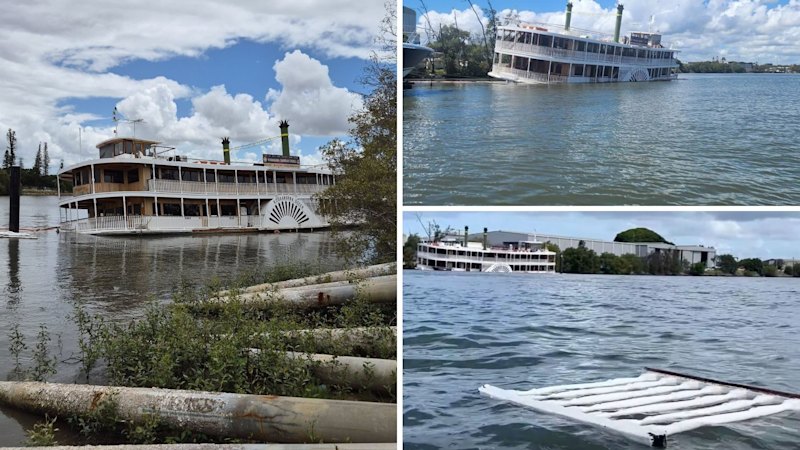
Kookaburra Queen I Sinking: Unraveling the Mystery of Brisbane's Icon
Brisbane awoke recently to a disheartening sight: the majestic Kookaburra Queen I, a beloved symbol of the city's vibrant river life and a cornerstone of its maritime heritage, found partially submerged at its mooring in Hemmant. This dramatic turn of events has not only raised eyebrows but ignited a fervent community discussion about maintenance, accountability, and ultimately, the
kookaburra queen future. Once a beacon of celebration and a prominent attraction during Expo '88, the iconic paddleboat now rests, a silent sentinel of uncertainty, prompting a deep dive into the circumstances surrounding its sudden decline.
A Legacy Adrift: From Expo '88 Star to Uncertain Waters
The Kookaburra Queen I isn't just any vessel; it's a floating piece of Brisbane's heart. Constructed in 1986, it quickly became a star attraction, ferrying countless visitors and locals during the monumental Expo '88. For decades, its decks echoed with laughter, music, and the joyous sounds of weddings, parties, and corporate events. Boasting two dance floors, a commercial kitchen, eight bathrooms, and seating for 320 guests, it was a premier venue, a true grande dame of the Brisbane River.
However, even icons face their trials. The Kookaburra Queen I has weathered significant storms, both literal and metaphorical. It sustained considerable damage during the devastating Queensland floods of 2011, a testament to the river's raw power. Further impairments followed during the 2022 flood, eventually leading to its cessation of commercial operations. These events marked a pivotal shift, transitioning the vessel from an active revenue-generator to a more static, albeit still cherished, landmark. Its recent sale for over $550,000 less than five months ago, through Grays auction house, seemed to promise a new chapter, yet the identity of its new owner remains shrouded in mystery, adding another layer to the unfolding drama.
The Shocking Discovery: Unraveling the Mystery of the Sinking
The partial submersion of the Kookaburra Queen I has sent shockwaves through Brisbane, particularly baffling those intimately familiar with the vessel. Former owner and captain, Jim Kelly, who steered the Kookaburra Queen I for years under Brisbane Cruises, expressed profound disbelief at its current state. "It’s bloody pathetic," he remarked, emphasizing the boat's robust construction. Kelly proudly noted its "solid triple diagonal hull," a design choice specifically intended to ensure its seaworthiness and longevity. He recounted that just a month prior to the incident, the paddleboat appeared well-maintained, showing no visible signs of distress.
This stark contrast between its recent condition and its abrupt sinking has created a perplexing puzzle. "Now it’s a mystery—suddenly it’s taken off the berth and it’s sitting on the bottom," Kelly stated, articulating the sentiment of many who struggle to comprehend how a seemingly sound vessel could succumb so rapidly. Was it neglect? A hidden structural failure exacerbated by time or environmental factors? Or perhaps an unforeseen incident at its new mooring? The specifics remain elusive, leaving much to speculation.
Adding to the complexity, a subsequent attempt to refloat the iconic paddlewheeler was ordered to stop. This halt raises further questions about the immediate plans for the vessel and the regulatory hurdles involved in such an operation. It underscores the challenges and complexities that face any efforts to restore or even salvage such a large, historic craft. For more details on this development, read about
Brisbane's Sunk Kookaburra Queen I: Refloat Bid Halted, Future in Doubt.
Navigating the Kookaburra Queen Future: Challenges and Hopes
The immediate concern for Maritime Safety Queensland has been minimized, as they've declared the partially submerged vessel is unlikely to create hazards for other navigating vessels in the river. However, this doesn't diminish the overarching questions about the
kookaburra queen future. What awaits this cherished piece of Brisbane's history?
Several possibilities loom large, each with its own set of challenges:
*
Salvage and Rehabilitation: This is the dream for many. A successful salvage operation would be the first step, followed by extensive repairs and restoration. Given the vessel's age, design, and previous flood damage, this would be a significant undertaking, likely requiring substantial financial investment and specialized maritime engineering. The unknown identity and intentions of the new owner are crucial here.
*
Repurposing: If full restoration as an operational commercial vessel proves unfeasible or too costly, there's potential for repurposing. Could it become a static attraction, a unique restaurant, or a museum piece? This would require it to be fully salvaged and stabilized on land or in a permanent mooring.
*
Dismantling: The least desirable outcome, but a pragmatic possibility if salvage or restoration proves impossible or economically prohibitive. This would mean the end of an era, a sad farewell to a piece of living history.
The community's hope remains firmly fixed on the Kookaburra Queen I’s restoration. Its sister vessel, the Kookaburra Queen II, continues to operate, albeit not without its own incidents, including a low-speed crash in 2019. The continued operation of the Kookaburra Queen II serves as a poignant reminder of what Brisbane stands to lose if the Kookaburra Queen I cannot be saved. The Kookaburra Queen I's journey from an Expo '88 highlight to its current predicament is thoroughly explored in
Kookaburra Queen I: From Expo '88 Icon to Brisbane River's Sinking Fate.
Preserving Brisbane's Maritime Heart: A Call to Action
The Kookaburra Queen I's plight is a stark reminder of the challenges inherent in preserving maritime heritage. Historic vessels, even those built to last, require continuous care, significant financial resources, and a deep understanding of their unique needs.
Here are some insights and considerations for the preservation of such invaluable assets:
*
Proactive Maintenance: Regular, thorough inspections and preventative maintenance are paramount. Overlooking minor issues can lead to catastrophic failures, especially in corrosive marine environments.
*
Funding and Ownership: The financial burden of maintaining large historic vessels is immense. Public-private partnerships, dedicated heritage funds, and transparent ownership are crucial for long-term sustainability.
*
Community Engagement: Public support and awareness are vital. When a vessel like the Kookaburra Queen I holds such a prominent place in collective memory, community outcry and engagement can often be a powerful catalyst for action.
*
Contingency Planning: For any significant vessel, especially those no longer actively operating, clear contingency plans for unexpected events (like severe weather or structural issues) are essential. This includes having protocols for emergency salvage or temporary repairs.
The saga of the Kookaburra Queen I resonates far beyond its immediate location. It highlights the delicate balance between urban development, economic viability, and the irreplaceable value of cultural and historical artifacts.
Conclusion
The sinking of the Kookaburra Queen I marks a sombre chapter in Brisbane's maritime history. From its origins as an Expo '88 icon to its recent, mysterious submersion, the paddleboat's journey encapsulates both the grandeur and vulnerability of historic vessels. While the immediate concerns for river navigation have been addressed, the long-term
kookaburra queen future remains shrouded in uncertainty. The hopes of countless Brisbane residents and maritime enthusiasts rest on a favourable resolution, one that honours the vessel's legacy and ensures this beloved icon might one day again grace the waters of the Brisbane River, even if in a new capacity. The mystery of its sinking serves as a poignant reminder of the vigilance required to protect our heritage and the deep connection communities form with their landmarks.