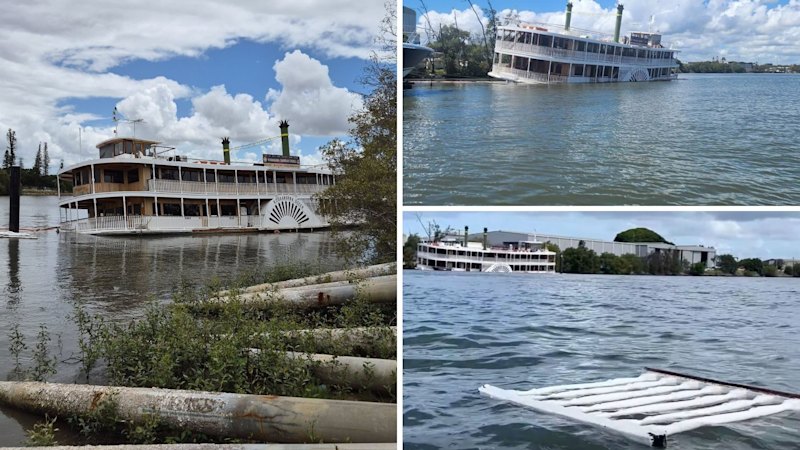
An Icon's Unfolding Tragedy: The Kookaburra Queen I's Sinking and Its Unclear Horizon
Brisbane’s riverine landscape has long been graced by the majestic presence of the Kookaburra Queen I, a paddleboat that once symbolised the city’s vibrant spirit and played a pivotal role in its tourism legacy. However, a recent discovery has cast a pall over its illustrious past: the beloved vessel has been found partially submerged at its mooring in Hemmant, initiating a wave of concern and speculation across the community. This unexpected turn of events not only raises pressing questions about maintenance and accountability but also throws the very Kookaburra Queen I's sinking into a profound mystery, challenging the narrative of its solid construction and historical resilience.
The circumstances surrounding this partial submersion are particularly perplexing given the vessel's recent history. Less than five months prior, the Kookaburra Queen I was sold for a significant sum exceeding $550,000 through Grays auction house. This sale, coupled with the vessel being reportedly well-maintained just a month before its decline, deepens the enigma of its abrupt sinking. As Brisbane watches on, the critical question looming is: what does the Kookaburra Queen I's future hold?
From Expo '88 Star to River Heritage: The Kookaburra Queen I's Storied Past
Constructed in 1986, the Kookaburra Queen I quickly cemented its place as a quintessential part of Brisbane’s identity. Its grand debut coincided with the monumental Expo '88, where it stood as a prominent attraction, charming visitors from across the globe. For decades, it served as a floating venue for countless celebrations, from intimate weddings to grand parties, hosting generations of Brisbanites and tourists alike. Its impressive specifications – boasting two spacious dance floors, a comprehensive public address system, comfortable seating for 320 guests, a fully equipped commercial kitchen, and eight well-appointed bathrooms – made it a premier choice for any event seeking a touch of riverine elegance.
Beyond its commercial success, the Kookaburra Queen I represented a tangible link to Brisbane's maritime heritage. Its classic paddleboat design, reminiscent of 19th-century steamers, evoked a sense of nostalgia and contributed significantly to the romantic allure of the Brisbane River. It was more than just a boat; it was a cherished landmark, an integral part of the city’s social fabric, and a testament to a bygone era of leisurely river travel. The sheer emotional attachment of the community to this vessel underscores the depth of concern now felt over its predicament, highlighting the importance of preserving such iconic pieces of local history.
The Unfolding Mystery: Sinking, Sale, and the Unseen Hand
The discovery of the Kookaburra Queen I sinking has ignited a firestorm of questions, particularly regarding the events leading up to its current state. Jim Kelly, the vessel's former owner and long-serving captain with Brisbane Cruises, expressed profound disbelief, describing the situation as "bloody pathetic." He confidently asserted that the Kookaburra Queen I possessed a robust triple diagonal hull, engineered to remain seaworthy for many years to come. Kelly's account that the boat was meticulously cared for and showed no signs of distress just a month before its sinking only deepens the mystery. "Now it’s a mystery—suddenly it’s taken off the berth and it’s sitting on the bottom," he lamented, echoing the confusion of many.
Adding another layer to this perplexing narrative is the recent sale of the vessel. After changing hands for over half a million dollars just five months ago, the identity of the new buyer remains undisclosed, shrouded in secrecy. This lack of transparency has fueled speculation, making it difficult to understand the chain of custody and responsibility in the period leading up to the incident. While Maritime Safety Queensland has offered some reassurance that the partially submerged vessel does not pose an immediate navigation hazard to other river traffic, the larger questions of neglect, damage, or even foul play continue to circulate. The abruptness of its decline, coupled with the lack of public information, has left many wondering about the unseen forces at play in the tragic fate of this river icon.
Battling the Elements: Floods and Commercial Challenges
While the immediate cause of the Kookaburra Queen I's sinking remains a mystery, the vessel's recent history has been marked by significant challenges. Brisbane's notorious floods have taken a heavy toll on the paddleboat over the years. The catastrophic Queensland floods of 2011 inflicted considerable damage, testing the vessel's resilience. More recently, the 2022 floods delivered further impairments, proving to be the final straw for its commercial operations. Following these successive blows, the Kookaburra Queen I ceased its life as a working commercial vessel, a poignant foreshadowing of its current state.
These incidents highlight the inherent difficulties in maintaining and operating large, older vessels in an environment prone to natural disasters. The costs associated with repairs, adherence to modern maritime safety standards, and ongoing maintenance can be astronomical, often outweighing the commercial viability for operators. While its sister vessel, the Kookaburra Queen II, continues to operate – albeit having faced its own challenges, including a low-speed crash in 2019 that caused injuries – the unique combination of the Kookaburra Queen I's age, its past flood damage, and the mystery of its recent decline underscores the complex factors influencing the Kookaburra Queen I's future. The decision to cease commercial operations likely reflected a pragmatic assessment of these escalating challenges, but it also marked the beginning of its journey towards an uncertain fate.
The Uncertain Horizon: What Lies Ahead for the Kookaburra Queen I?
As the Kookaburra Queen I rests partially submerged in the Brisbane River, the ultimate question on everyone's mind is clear: what does the kookaburra queen future truly hold? The path forward appears fraught with obstacles, and concrete plans for its recovery or rehabilitation remain conspicuously absent. Compounding this uncertainty, a recent development saw a bid to refloat the iconic paddlewheeler ordered to stop, further complicating any immediate rescue efforts and leaving its fate hanging precariously.
Several scenarios could play out for this beloved vessel, each with its own set of challenges and implications:
- Salvage and Restoration: This is the most hopeful outcome for many community members. It would involve a complex and costly operation to refloat the vessel, assess the extent of the damage, and undertake extensive repairs. However, the financial commitment required could be substantial, especially given its past flood damage and recent unknown incident. The expertise and resources needed for such a project are immense.
- Static Preservation: If restoration to full operational capacity proves unfeasible, another option could be to salvage and preserve the vessel as a static attraction, perhaps as a museum piece or a unique waterfront dining experience. This would still require significant investment but could offer a way to maintain its heritage value without the ongoing operational costs of a working vessel.
- Scrapping: The most disheartening prospect, but one that cannot be entirely ruled out, is the possibility of the vessel being deemed beyond economic repair and subsequently scrapped. This would represent a profound loss for Brisbane's maritime heritage.
The decision on the kookaburra queen future will likely hinge on several critical factors: the structural integrity of the hull post-sinking, the financial willingness of the current owner (if known) or other stakeholders to invest, the regulatory requirements for salvage and repair, and the overall community and government support for its preservation. The halt to the refloat bid signifies potential legal, logistical, or financial hurdles that must first be overcome, making the immediate outlook even more ambiguous.
Conclusion: Preserving a Legacy, Hoping for a Future
The sinking of the Kookaburra Queen I is more than just the distress of an old boat; it's a poignant moment for Brisbane, reflecting on the transient nature of even its most iconic landmarks. From its proud beginnings as an Expo '88 star to its current, mysterious predicament at Hemmant, the vessel embodies a rich tapestry of history, celebration, and resilience against natural forces. While the immediate future remains uncertain, and details regarding salvage or the identity of its owner are scarce, the underlying hope within the community for its restoration remains strong. The Kookaburra Queen I stands as a powerful reminder of the importance of maritime heritage preservation and the continuous challenges in maintaining such historical assets. As the Brisbane River continues its flow, the city eagerly awaits news, hoping that this chapter isn't the final one for a true queen of its waters.